Home › Articles › Perimenopause anxiety at night
Perimenopause anxiety at night
By Alessio, Certified Breathwork Instructor · last reviewed 2026-10-26
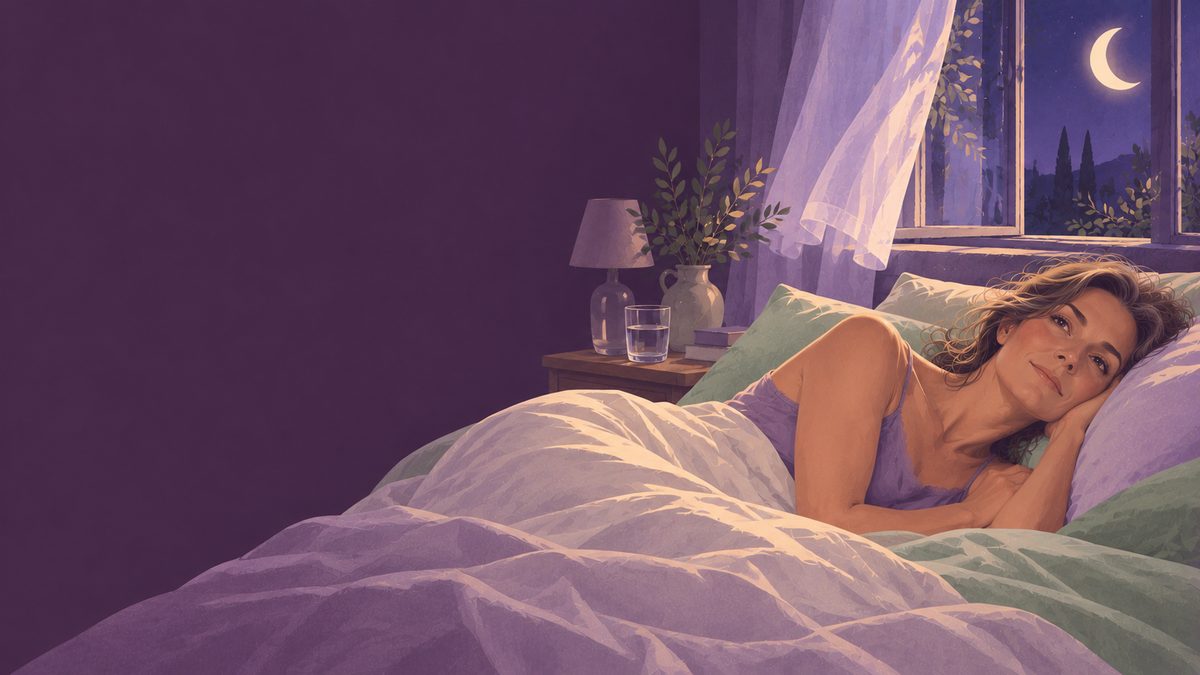
You've handled stress your whole life. Work, kids, deadlines, other people's problems. Then, often in your forties, the nights change. You wake up wired at 3am. A worry you'd normally shrug off sits on your chest. Your heart races for no reason you can name.
You're not imagining it. Perimenopause anxiety at night is common, and it has very little to do with how strong you are. Shifting hormones can make sleep lighter and anxiety louder, and a slow breath can help you settle. Below is the why, and a 5-minute practice for tonight.
Key takeaways
- In perimenopause, hormone levels swing up and down, and sleep and mood can change with them.
- Night sweats, a racing heart and broken sleep can all feed anxiety, and anxiety feeds broken sleep.
- A slow breath with a long exhale won't change your hormones, but it can help your body come down enough to sleep. And a doctor can help with the rest.
Why it shows up now
Think of your body as a house with a thermostat. For decades it ran on a rhythm you knew. In perimenopause, someone keeps changing the settings in the middle of the night. Sometimes the heating jumps on at 3am for no reason.
That's roughly what the hormone shift does. Estrogen rises and falls unevenly instead of dropping in a straight line, and sleep and mood often change with it. Mayo Clinic lists trouble sleeping and mood changes among the common signs of perimenopause, and notes sleep can change even without night sweats. The NHS also lists anxiety and palpitations.
Common patterns include:
- falling asleep fine, then waking at 2 or 3am, wide awake
- a sudden rush of heat or sweat, then a racing heart and racing thoughts
- anxiety that feels physical, in the chest and stomach, without a clear reason
Anxiety for no reason? Sometimes there's no worry behind it at all, only the feeling in your body: a tight chest, a fluttery stomach, a fast heartbeat. Hormone changes and poor sleep can both play a part. But don't put every symptom down to perimenopause. A heartbeat that races, pounds or skips is worth checking with your doctor.
Under a YouTube video about trauma, anxiety and burnout, one viewer asked exactly this: is it hormonal, or trauma, or both? Another wrote that their nervous system had been stuck on high alert for years, then came a major traumatic event, then perimenopause made it worse. For many people it may be both. Hormones can make an old pattern louder, and a doctor can help you sort out which is which.
What breathing can and can't do here
I want to be straight with you.
Breathing does not balance hormones, and it won't stop hot flashes. The Menopause Society's 2023 review of non-hormone options does not recommend paced breathing for hot flashes, because studies didn't show it helps with them.
What a slow breath can do is give you something gentle to focus on when your body feels wired. It may help you settle, and make it easier to fall asleep or fall back asleep. That part is about your nervous system, not your hormones.
So: talk to your doctor about the hormones, and use the breath for the nights.
Try this now: the side-lying pillow breath
This one is gentle, and it's easy to do when you're hot and restless and don't want to lie flat on your back.
- Lie on your side, knees slightly bent. Put a pillow between your knees if that's comfortable.
- Hug a second pillow to your chest and belly, or rest your top hand on your belly.
- Take a slow breath in through the nose and feel your belly press gently into the pillow or your hand.
- Breathe out slowly through your nose, a little longer than the breath in. About 4 in, 6 out. If that feels long, shorten both. It should feel comfortable.
- Let your jaw, shoulders and hands go soft on every breath out.
- Keep going for 5 minutes, or until you drift off.
If watching your breath stirs you up, open your eyes, forget the counting, or stop altogether. If you feel dizzy, go back to normal breathing.
If you're hot: push the covers off one leg or one arm, and keep breathing. Don't fight the heat. Let it pass, and come back to the breath. If it's too much, cool down first. The breath can wait.
How long: 5 minutes at bedtime, and again whenever you wake up. How often: try it regularly for a couple of weeks and see how it feels.
A note from me: a sign it's working: the breath gets finer and finer, until you can barely feel it. Don't try to make that happen. Just notice it if it comes. That quiet, almost invisible breath is where the body starts to let go of the day.
For the full technique on your back, see belly breathing with a pillow. You can also lie on your side and breathe gently through your nose as you fall asleep.
Small things that help the nights
- Keep the bedroom cool. Layers you can throw off are easier than one heavy duvet.
- Watch the evening wine and the afternoon coffee. Both can make the early hours lighter, and that's when many people already tend to wake. The other night habits are in anxiety at night.
- Write down what you notice. Night waking, heat, mood, your cycle. It makes the conversation with your doctor much easier.
When to see a doctor
Don't wait for an appointment if you have chest pain, a racing heart with faintness or dizziness, a real struggle to breathe, or thoughts of harming yourself. Call your local emergency number right away (in the US, you can also call or text 988).
Please talk to your doctor or a menopause specialist if:
- anxiety, low mood or broken sleep are affecting your days. There are real options, with and without hormones, and your doctor can walk you through them.
- your heart races, pounds or skips. Get it checked first. Don't put it down to hormones.
- you snore, gasp or stop breathing in your sleep. Sleep apnea can be behind broken sleep, and it needs checking.
- your periods change a lot, or you bleed after periods have stopped.
Breathing is a relaxation practice, not medical care. It works alongside whatever else you and your doctor decide.
FAQ
Can perimenopause cause anxiety at night?
Yes, for many women. Hormone swings can affect mood and sleep directly, and night sweats or a racing heart can wake you and set off anxious thoughts. A doctor can help you sort out what's hormonal and what isn't.
Why do I wake up at 3am in perimenopause?
Night sweats, needing the bathroom or a racing heart can pull you out of sleep. Once you're awake, an anxious mind fills the silence. See also waking up at 3am every night.
Does breathing help with hot flashes?
Not for the hot flashes themselves. The Menopause Society does not recommend paced breathing for them, based on good-quality studies. But a slow breath can help you settle and fall back asleep after one, which is a different and very real benefit.
Keep going
- Belly breathing with a pillow: the full technique.
- Waking up at 3am every night: the slow bedtime breath.
- Anxiety at night: why it gets worse when you lie down.
- Free 10-minute practice for the moment you turn the light off.
Sources: M. Pistono, Breathe How You Want to Feel (belly breathing, lying on your side as you fall asleep) · J. Hall, Breathe (lying down, hands resting on the belly) · The Menopause Society, 2023 Nonhormone Therapy Position Statement, Menopause 30(6) · Mayo Clinic: Perimenopause · NHS: Menopause symptoms · public YouTube comments under anxiety videos (anonymous, paraphrased).
Can't switch off at night?
Get my free 10-minute guided practice for the moment you turn the light off. Gentle: no breath holds, no fast breathing.
Keep reading
 Waking up with a panic attackWaking up with a panic attack, racing heart or shaking? What may be happening, and a gentle breathing and self-holding practice for the first minute.Read →
 Waking up at 3am every nightWaking up at 3am with your mind racing? What may be behind it, and a gentle breathing practice to help you settle and fall back asleep.Read →
 How to stop overthinking at nightOverthinking at night? You can't argue your mind quiet, but you can move your attention into your body. A simple breath and body scan to do in bed.Read →
 Anxiety at night: why it gets worse when you lie downWhy does anxiety at night feel so much worse? Learn why your mind races in bed, and try a gentle 2-minute breathing exercise to help you unwind.Read →