Home › Articles › Waking up with a panic attack
Waking up with a panic attack
By Alessio, Certified Breathwork Instructor · last reviewed 2026-10-24
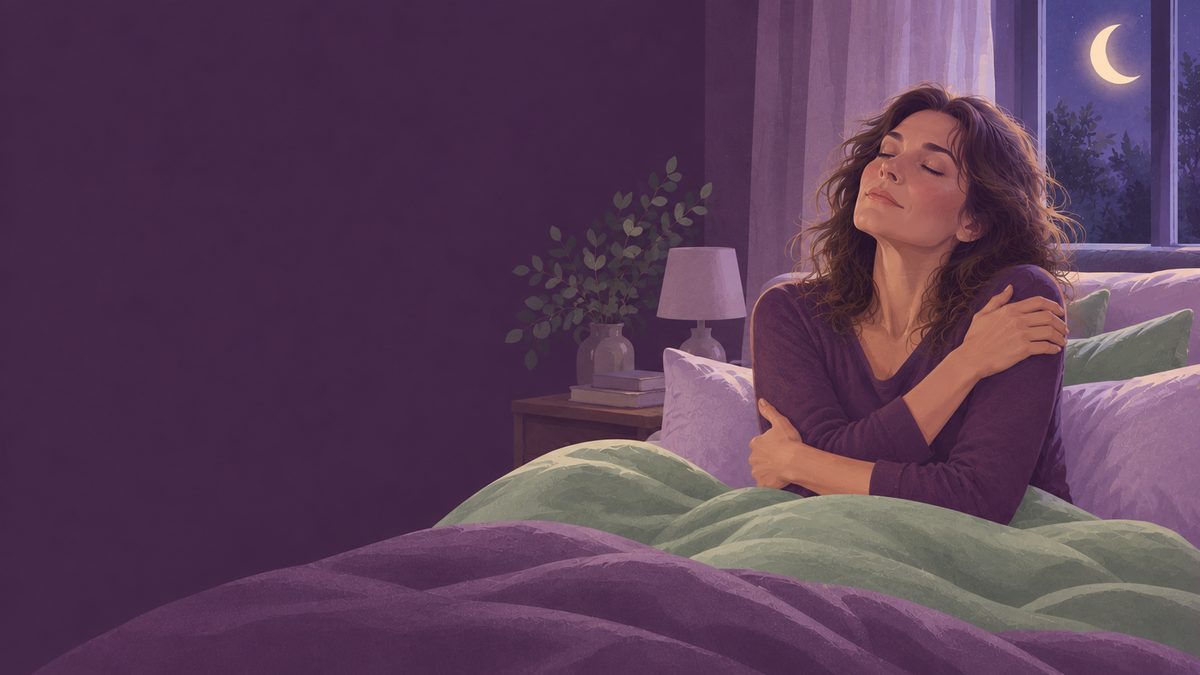
You're asleep, and then you're not. Your heart is pounding, your body is shaking, and you feel like something terrible is happening, even when there's no obvious danger. You're in your bed, in the dark.
Waking up with a panic attack is frightening. For many people the worst part comes after: the fear that it will happen again, which makes it hard to fall asleep at all. In the first minute, hold yourself and let the breath out slow down. Below is how, and how to get back to sleep.
First, one check. If you have chest pain, pain spreading to your arm or jaw, or trouble breathing that won't settle, call emergency services now. Don't wait to see if it passes.
Key takeaways
- Chest pain, pain in the arm or jaw, or trouble breathing that won't settle is not something to wait out. Call emergency services.
- A night panic attack is a sudden wave of fear that wakes you up, often with a racing heart, shaking and fast breathing.
- In the moment, it usually helps more to slow the breath out than to take big breaths in.
- Holding yourself, one hand under the arm and one on the shoulder, can help you feel held while you breathe.
What's happening in your body
Think of a smoke alarm that goes off because you burned the toast. The alarm is real, the noise is real, but there's no fire.
A panic attack is often like that: your body's alarm system going off without a danger you can see. Your heart speeds up. Your breathing gets fast and shallow.
That fast breathing matters. It can bring dizziness, tingling and a tight chest, which feel like even more proof that something is wrong. So the alarm gets louder. Why that happens is in breathing into a paper bag.
Panic at night can come out of nowhere, or after a bad dream, or after a sound that wakes you. The Cleveland Clinic describes nocturnal panic attacks as a sudden fear that wakes you from sleep, often with trouble breathing and a racing heart. They're different from night terrors: with panic you're awake and you feel the fear, while a night terror happens in your sleep and you often don't remember it.
It happened to me
Sometimes I woke up in panic mode, after a bad dream, or because I heard a noise that wasn't real. It was really disturbing. My body was shaking, and my heart was racing. Back then I couldn't fall back asleep.
Now, if it happens, I start focusing on my breath right away, I calm down quickly, and it isn't a problem anymore. I can fall back asleep.
Try this now: the first minute
If you've checked for the emergency signs above, you don't need to get up, and you don't need to understand what caused it.
The first minute
1. Hold yourself. Cross your arms over your chest: tuck one hand under the opposite armpit, near your heart, and rest the other hand on the opposite shoulder. A small hug, from you to you. It's a simple hold for anxiety: you feel contained by your own arms. It's usually done sitting or standing; here it's adapted for bed.
2. Feel what's under you. The mattress, the pillow, the weight of your body. Look around for a moment if it helps you know where you are.
3. Take a few gentle breaths. Breathe in softly through the nose, not big. Then breathe out slowly, through the nose or through soft lips. If you can, let the breath out be a little longer than the breath in. Don't force it.
The next few minutes
4. Keep going if it helps. A few more slow breaths. Count them only if counting helps. You don't need to reach a number or a certain kind of calm.
5. Then let the breath be normal, keep your hands where they are, and notice whatever changes. Your heart doesn't have to slow down right away.
If focusing on your breath makes things worse, stop. Open your eyes, let your breath do whatever it wants, and just feel the mattress holding you. Keep your arms where they are, or let them go.
How long: a minute or two, then as long as you need. The worst of a panic attack usually passes within 10 minutes (Cleveland Clinic), though sleep can take longer to come back. How often: whenever you wake up like this. If you practice the slow out-breath during the day, it may come more easily at night. The 2-minute long exhale timer is a good way to practice. It uses a set rhythm, 4 seconds in and 8 out. That's for daytime. At night, use whatever feels easy.
Skip the big gulps of air. Small breath in, slow breath out.
Getting back to sleep
After a panic attack your body needs a little time to come down. Don't fight it and don't try to force sleep.
- Keep the room dark. If you need light, keep it low.
- Stay away from the phone, especially from searching your symptoms.
- Keep breathing slowly, with longer exhales, until you feel heavy again.
- Still wired after a while? Follow the steps in waking up at 3am.
When to see a doctor
Please see a doctor if:
- it's the first time you've woken up like this. Get your heart and thyroid checked, because other problems can feel similar.
- you have chest pain, pain in the arm or jaw, or trouble breathing that doesn't settle. Call emergency services.
- it happens more than once or twice, or you start to fear going to sleep.
- you snore loudly, gasp, or someone sees you stop breathing in your sleep.
- you also have panic attacks during the day.
Good help exists for panic attacks, such as talking therapy (CBT) and sometimes medication. Never stop or change medication because of this page. Talk to your doctor. Breathing is a relaxation practice, not medical care, and it works alongside whatever else you're doing.
FAQ
Why do I wake up in panic for no clear reason?
Sometimes it follows a bad dream, a noise or a stressful period. Sometimes there's no clear reason at all. Your body's alarm system can fire during sleep, the same way it can during the day. If it's new for you, get checked by a doctor, because a racing heart or chest symptoms can have other causes too. Panic attacks can be treated, and the Cleveland Clinic lists talking therapy and medication.
How do I stop a panic attack at night?
You can't always switch it off, but you can help it pass. Don't take big breaths. Hold yourself, one hand under the arm and one on the shoulder, and feel the bed under you. Then take a few gentle breaths, letting each breath out be a little slower than the breath in.
Should I get out of bed after a panic attack?
Not straight away. Do the first few minutes in bed, with the self-hold and the slow breath out. Only if you're still wide awake much later is it worth getting up for a bit.
Keep going
- Long exhale breathing: practice it during the day.
- Waking up at 3am every night: when it's thoughts, not panic.
- Breathing into a paper bag: does it work?: and what to do instead.
- Free 10-minute practice for the moment you turn the light off.
Sources: J. Hall, Breathe (Breath Awareness to Release Anxiety) · M. Pistono, Breathe How You Want to Feel (overbreathing and its symptoms, p. 114) · Cleveland Clinic, Nocturnal panic attacks · Alessio's own experience.
Can't switch off at night?
Get my free 10-minute guided practice for the moment you turn the light off. Gentle: no breath holds, no fast breathing.
Keep reading
 Perimenopause anxiety at nightPerimenopause anxiety at night can feel like it came from nowhere. Learn why sleep and mood change, and try a gentle side-lying breathing practice.Read →
 Waking up at 3am every nightWaking up at 3am with your mind racing? What may be behind it, and a gentle breathing practice to help you settle and fall back asleep.Read →
 How to stop overthinking at nightOverthinking at night? You can't argue your mind quiet, but you can move your attention into your body. A simple breath and body scan to do in bed.Read →
 Anxiety at night: why it gets worse when you lie downWhy does anxiety at night feel so much worse? Learn why your mind races in bed, and try a gentle 2-minute breathing exercise to help you unwind.Read →